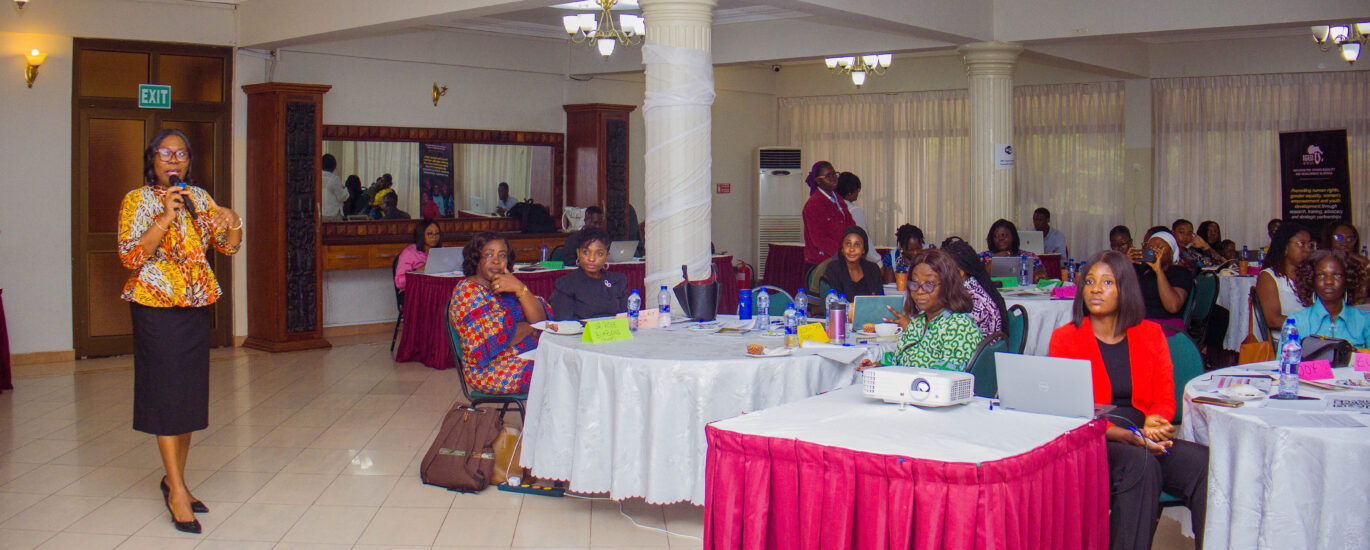
Advancing Gender Equality, Human Rights, and Inclusive Development Across Africa
The Initiative for Gender Equality and Development in Africa (IGED-Africa) is a women-led, Ghanaian-registered non-governmental organization with a regional focus on advancing gender equality, human rights, and inclusive development across Africa.
Vision
A peaceful and inclusive society that upholds gender equality, respect human rights and empower women and girls for sustainable development.
Mission
To promote the effective attainment of gender equality, human rights and inclusive participation of women and girls through strategic engagement and partnership, empowerment and capacity development, evidenced based research, advocacy and networking for sustainable development.
Based in Accra, Ghana, IGED-Africa works at national, regional, and international levels to promote gender equality, human rights, women’s empowerment, social justice, and inclusive development. The organization exists to strengthen the voices, capacities, participation, and resilience of women, girls, and marginalized groups, enabling them to claim their rights and contribute fully to the development of their communities and societies.
IGED-Africa recognizes that sustainable development cannot be achieved where inequality, poverty, violence, insecurity, exclusion, and injustice continue to limit the lives and potential of women and girls. Its work is grounded in the belief that women, men, girls, and boys must have equal opportunities, equal access to resources, and equal protection under the law.
Although nationally located in Ghana, IGED-Africa has a strong pan-African outlook. The organization connects community-level realities with regional and international human rights frameworks, ensuring that policy commitments on gender equality are linked to practical issues affecting women and communities on the ground.
Over the years, IGED-Africa has worked with women’s groups, civil society organizations, governments, development partners, academic institutions, regional bodies, local authorities, and community actors across Africa. Its work has included engagement with women’s rights organizations and women’s groups in more than 40 African countries, linking grassroots experiences with advocacy at national, regional, and international levels.
Our Story
IGED-Africa was founded by women who believed that gender equality is both necessary and possible. This conviction grew out of years of direct engagement with individuals and communities affected by gender inequality, human rights violations, violence against women, land and property rights abuses, housing and inheritance challenges, child rights violations, armed conflict, civil unrest, and other forms of injustice.
These experiences revealed how deeply inequality affects development outcomes across Africa. They also showed the importance of linking community realities with policy advocacy, legal reform, and regional human rights mechanisms.
From communities in Ghana to networks across Africa, IGED-Africa has worked to connect women’s lived experiences, local advocacy, and creative community initiatives with policymakers and institutions. This commitment to linking theory with practice continues to shape the organization’s approach.
Our Programmes
IGED-Africa’s work is organized around four major programme areas.
Gender and Development
This programme advances gender equality and women’s empowerment as drivers of sustainable development, social justice, and inclusive growth. It addresses systemic inequalities that limit the participation, opportunities, and rights of women, girls, and marginalized groups in education, healthcare, governance, economic participation, access to resources, and decision-making.
Women’s Property and Inheritance Rights
This flagship programme promotes and protects women’s rights to own, inherit, access, control, and benefit from land, housing, and other productive assets. It addresses legal, social, cultural, and economic barriers that prevent women from enjoying equal property and inheritance rights, while supporting awareness, legal assistance, advocacy, and engagement with traditional and community leaders.
Gender, Peace and Security
This programme advances the participation, protection, rights, and leadership of women and girls in conflict prevention, peacebuilding, conflict resolution, humanitarian response, and post-conflict recovery. It recognizes that sustainable peace cannot be achieved without the meaningful inclusion of women in peace and security processes.
Women’s Economic and Financial Inclusion
This programme promotes women’s economic empowerment, financial independence, and participation in economic development. It works to address barriers that limit women’s access to finance, productive assets, markets, technology, entrepreneurship support, and economic decision-making.
Regional and International Advocacy
A major part of IGED-Africa’s work has focused on using regional and international human rights mechanisms to advance women’s land, property, and inheritance rights.
Since 2013, IGED-Africa has worked closely with the African Commission on Human and Peoples’ Rights (ACHPR) in The Gambia, collaborating with partners from across Africa and beyond to advocate for women’s rights to land and productive resources under the Maputo Protocol.
One landmark result of this advocacy was the adoption of Resolution 262 of the ACHPR on the Rights of Women to Land and Productive Resources, a significant regional instrument supporting women’s land and property rights advocacy.
IGED-Africa has also played an important role in advocacy around General Comment No. 6 on Article 7(d) of the Maputo Protocol, which provides guidance to African states on the equitable distribution of property during separation, divorce, or annulment of marriage.
This work is especially important because women’s contributions within marriage are often overlooked when property is divided. General Comment No. 6 helps clarify that both monetary and non-monetary contributions should be recognized, including unpaid care work, domestic labour, childcare, farming, household management, and support for a spouse’s career or business.
At the international level, IGED-Africa has engaged mechanisms including CEDAW and the Human Rights Committee, contributing to advocacy on women’s land, property, and inheritance rights in Ghana and across Africa.
Our Values
IGED-Africa is guided by the values of equality, equity, empowerment, inclusion, integrity, collaboration, and sustainability.
These values shape its commitment to building societies where no one is left behind, where women and girls can fully exercise their rights, and where communities are supported to become more just, inclusive, and resilient.
Through advocacy, research, capacity building, mentorship, legal empowerment, and strategic partnerships, IGED-Africa continues to work toward an Africa where gender equality is not only promised in policy, but realized in the everyday lives of women, girls, families, and communities.