
Resolution 262 of the African Commission on Human and Peoples’ Rights is an important regional instrument for advancing women’s rights to land and productive resources in Africa.
For the Initiative for Gender Equality and Development in Africa (IGED-Africa), the resolution represents a major milestone in regional advocacy for gender equality, economic justice, and women’s land rights.
Across Africa, land remains one of the most important sources of identity, security, livelihood, housing, food production, and economic opportunity. Yet women often face barriers to owning, inheriting, controlling, and benefiting from land and other productive resources. These barriers are shaped by discriminatory laws, harmful customary practices, unequal inheritance systems, limited access to justice, and social norms that restrict women’s rights.
When women are denied secure access to land and productive resources, the consequences are far-reaching. Families become more vulnerable to poverty, women’s economic independence is weakened, food security is affected, and communities lose the full benefit of women’s labour, leadership, and contribution to development.
Resolution 262 affirms the importance of protecting women’s rights to land and productive resources as part of the broader human rights framework in Africa. It provides an advocacy tool for civil society organizations, policymakers, legal practitioners, community leaders, and women’s rights defenders working to ensure that women can access, own, use, inherit, and control land and productive assets on an equal basis.
IGED-Africa’s engagement with the African Commission on Human and Peoples’ Rights (ACHPR) has been central to its regional advocacy on women’s land and property rights. Since 2013, IGED-Africa has worked closely with the Commission and with partners across Africa and beyond to promote women’s rights under the Maputo Protocol, including rights related to land, property, inheritance, and economic security.
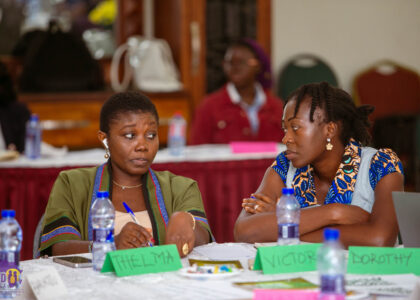
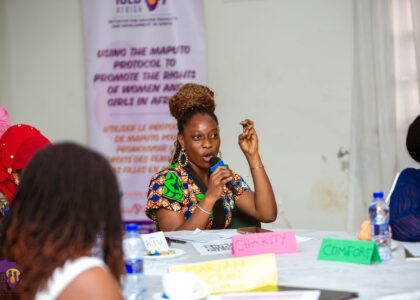
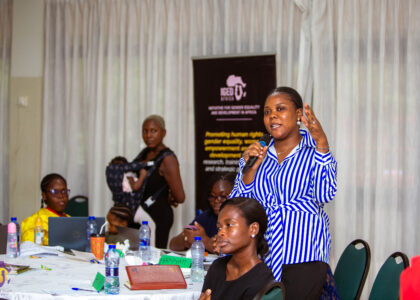
Through panel discussions, strategic side events, capacity-building activities, shadow reporting, working sessions, and bilateral meetings with Commissioners and civil society organizations, IGED-Africa has contributed to strengthening regional attention to women’s land rights.
The adoption of Resolution 262 was a landmark achievement in this advocacy journey. It strengthened the basis for continued work on women’s land and productive resource rights and provided a regional reference point for campaigns, legal reform efforts, public education, and institutional engagement.
For IGED-Africa, Resolution 262 is not only a legal or policy instrument. It is also a practical advocacy tool that helps connect women’s lived experiences with regional human rights standards. It supports efforts to challenge discriminatory practices, promote gender-responsive land governance, and ensure that women’s contributions to families, communities, agriculture, housing, and economic development are fully recognized.
By advancing awareness and implementation of Resolution 262, IGED-Africa continues to support an Africa where women and girls can enjoy equal rights to land, property, productive resources, dignity, and economic opportunity.