Civil society organizations play a critical role in advancing women’s rights across Africa. Through advocacy, research, public education, legal support, community mobilization, and policy engagement, they help ensure that women’s lived experiences are reflected in laws, institutions, and development priorities.
One important space for this work is the African Commission on Human and Peoples’ Rights (ACHPR), the regional human rights body responsible for promoting and protecting human and peoples’ rights under the African Charter.
For organizations working on women’s rights, the ACHPR provides opportunities to raise urgent issues, influence regional standards, engage state actors, and build collective advocacy across countries. These mechanisms are especially important for issues such as women’s land rights, property and inheritance rights, gender-based violence, access to justice, economic rights, and women’s participation in governance and peacebuilding.
Civil society organizations can engage ACHPR mechanisms in several ways.
They can participate in NGO forums and public sessions, where advocates share evidence, highlight emerging concerns, and coordinate strategies with other organizations. These spaces allow civil society to bring community-level realities into regional conversations and strengthen collective advocacy around women’s rights.
Organizations can also submit shadow reports and alternative reports that provide independent information on how states are implementing their human rights obligations. These reports are especially important where official state reports do not fully reflect the experiences of women, girls, and marginalized communities.
Civil society groups can engage Special Rapporteurs and Commissioners through briefings, working sessions, side events, and bilateral meetings. These engagements help ensure that specific issues, such as women’s land and property rights, receive sustained attention within regional human rights processes.
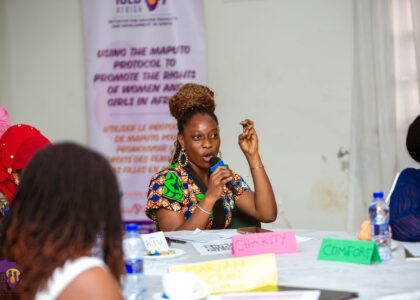
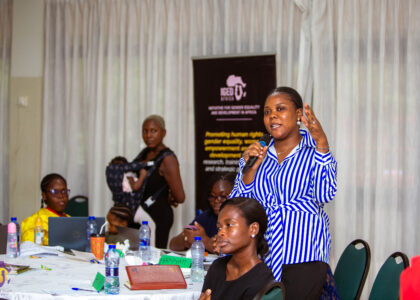
Capacity building is another important pathway. Organizations can train women’s rights advocates, community leaders, paralegals, and local civil society actors on how to understand and use ACHPR standards, including the Maputo Protocol, resolutions, general comments, and other regional instruments.
The Initiative for Gender Equality and Development in Africa (IGED-Africa) has used these mechanisms as part of its regional advocacy on women’s land, property, and inheritance rights. Since 2013, IGED-Africa has worked with the ACHPR and partners across Africa and beyond to advance women’s rights to land and productive resources under the Maputo Protocol.
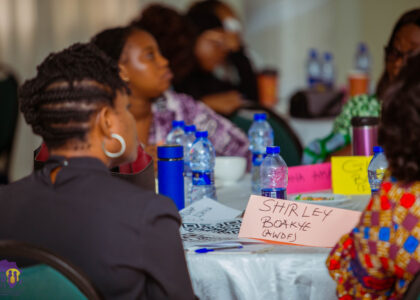
This work has included panel discussions, strategic side events, training and capacity-building sessions, presentations of shadow reports, working sessions with Commissioners and civil society organizations, and bilateral advocacy meetings.
Through this engagement, IGED-Africa has contributed to important regional advocacy outcomes, including work around Resolution 262 on the Rights of Women to Land and Productive Resources and General Comment No. 6 on Article 7(d) of the Maputo Protocol.
For civil society, ACHPR mechanisms are not distant or abstract legal spaces. They are practical advocacy tools that can help connect local experiences with regional standards, strengthen accountability, and support legal and policy reform.
By using these mechanisms effectively, civil society organizations can help ensure that women’s rights are not only recognized in treaties and declarations, but protected and realized in the everyday lives of women and girls across Africa.